
Chronic Guilt and Harsh Self-Criticism
You can't quite put your finger on why, but guilt seems to follow you into almost everything. Saying no to a request. Taking time for yourself. A decision you made years ago that you still quietly replay. Even when you've done nothing wrong, some part of you assumes you probably have, or that you will, eventually, if you're not careful enough.
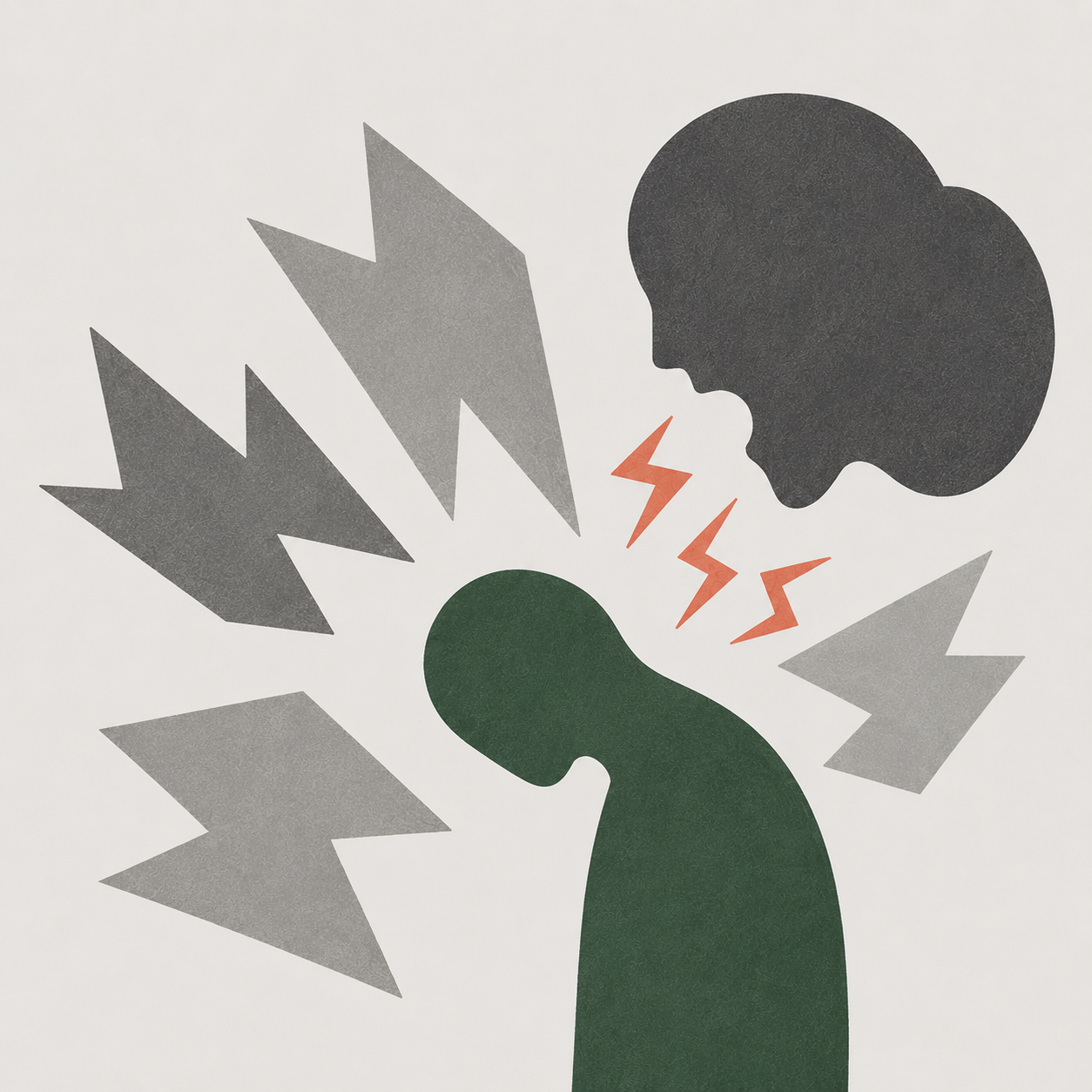
Underneath that guilt is usually a relentless inner critic, a voice that's faster, louder, and far less fair to you than you would ever be to someone else. It notices every mistake immediately and rarely registers what went well. Over time, this voice can start to feel less like a voice and more like the truth, simply how things are, rather than a pattern that was learned.
And it was learned, somewhere. Often in childhood, in the messages, spoken or unspoken, about what earned love, approval, or safety, and what risked losing them. A child who learned that mistakes were dangerous, or that other people's needs always came first, often grows into an adult whose guilt switches on automatically, long before any actual wrongdoing has occurred.
In therapy, we trace this pattern back to where it started, not simply to assign blame to the past, but to understand why guilt became your default setting in the first place. From there, we look at what it would actually take to respond to yourself the way you'd respond to someone you cared about: with the same fairness, the same patience, and the same willingness to let a mistake just be a mistake, rather than evidence of something deeper and irredeemable.
This isn't about lowering your standards. It's about no longer needing constant self-punishment to meet them.